



The University of Graz attaches particular importance to the protection and maintenance of the old tree population and to the addition of carefully selected new and replanted trees. It endeavours to increase the diversity of plants and animals, including amphibians, insects and birds, and to make this tangible for university members and the public through targeted communication measures. The University of Graz also contributes its expertise to construction projects in order to make the best possible use of green space management during the planning and construction phase in favour of biodiversity. The aim is to design the campus as an ecosystem that is adapted to future climatic challenges through careful species selection and sustainable irrigation. This should ensure that the campus remains an attractive place to spend time and a recreational area for university members and the population of Graz.
Based on the biodiversity strategy, four key priorities are being pursued:
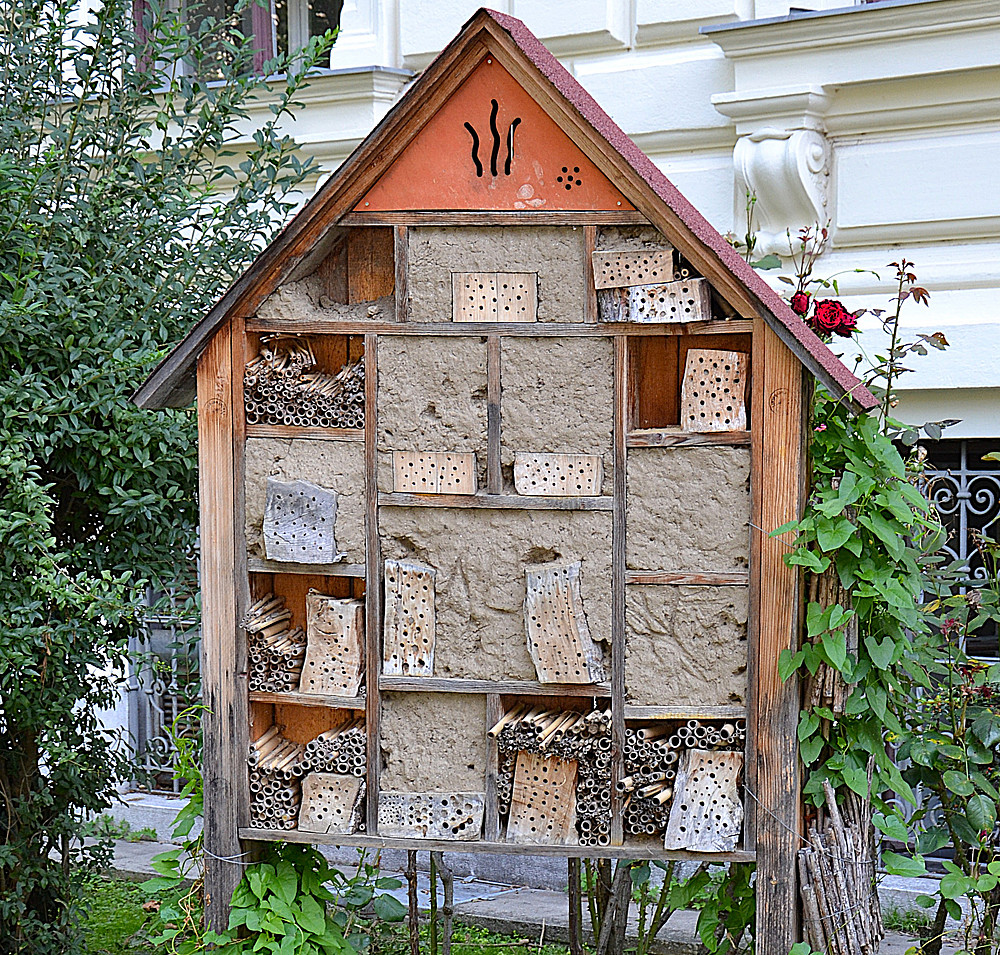
- Measures for targeted species conservation, for example through nesting boxes for birds and bats, insect hotels or structural elements such as deadwood and stone structures.
- The promotion of biodiversity through near-natural areas, flowering meadows, extensive management and the use of native plant species.
- The development of so-called stepping-stone habitats with additional climate benefits, for example through green roofs and facades, the removal of impervious surfaces, or water retention via retention areas.
- Raising awareness of biodiversity through educational events, information materials or citizen science projects.
Many of these measures are already being implemented. New flowering areas are being created, insect nesting aids have been installed, and buildings are being planned or redesigned with greater consideration for wildlife. Alongside this, scientific findings are being incorporated into the implementation, for example through final-year projects, monitoring schemes or student involvement.
Find out more about our current projects, specific target species and opportunities to get involved.
Because biodiversity is a shared concern and starts right on our doorstep.