



Each of these trees tells its own story and not only contributes to the aesthetic enrichment of the campus, but also plays an important role in the biodiversity and microclimate of the neighbourhood. With their wide-spreading crowns, they provide shade, offer a habitat for numerous animals and plants and at the same time are silent witnesses to past centuries. Their imposing appearance makes them true natural monuments that captivate not only students and researchers, but also walkers. These old giants lend the campus a very special, almost majestic aura and remind us of the importance of nature and sustainability in the midst of urban space.
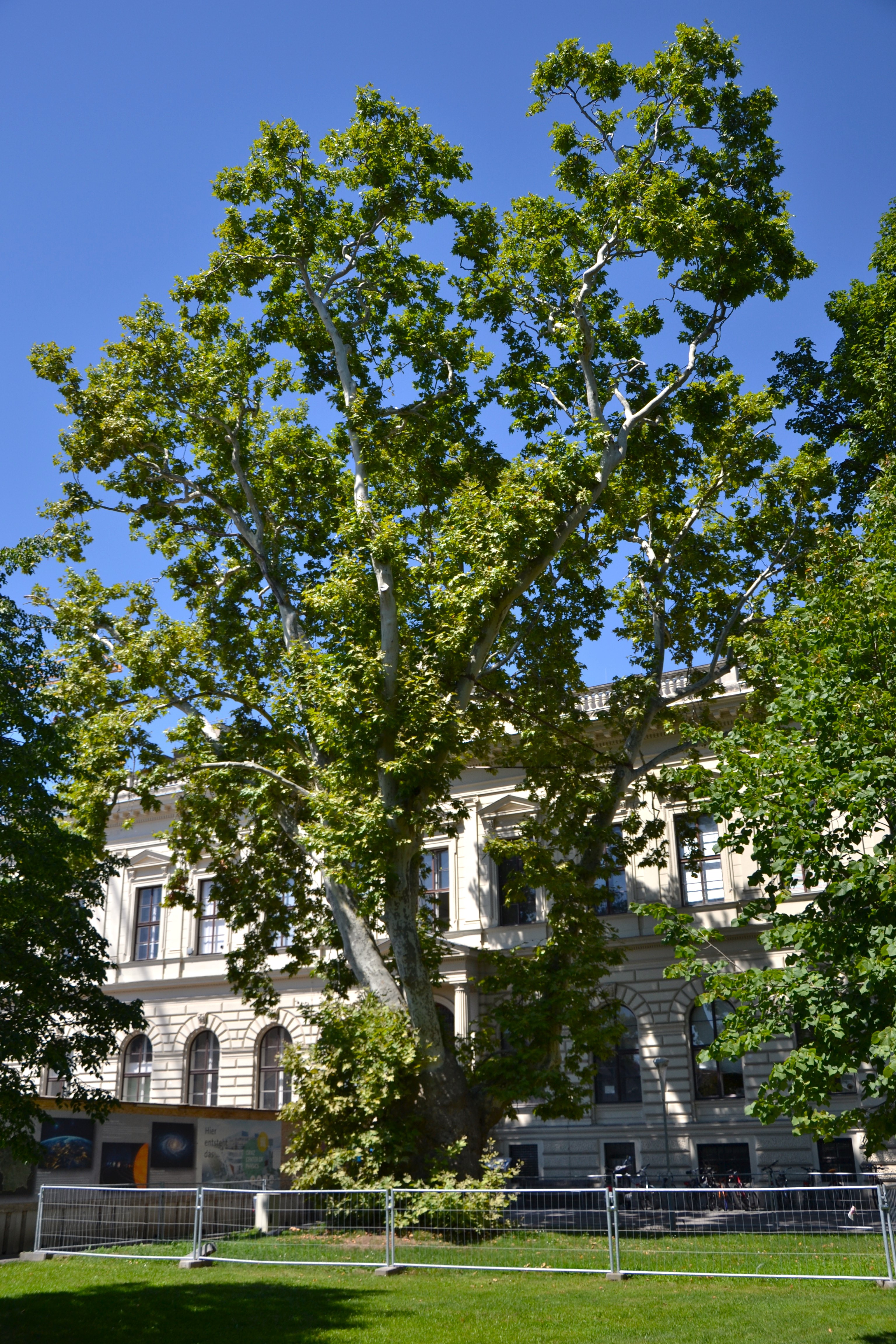
1. London plane tree
(Platanus × hispanica)
The mightiest tree on campus is a maple-leaved plane tree (Platanus × hispanica) standing 15 to 20 metres tall, 6 metres thick and with a trunk circumference of 2 metres. Its crown spans some 15 metres and provides a valuable habitat for numerous animal and plant species.
The London plane tree, also known as the London plane, is a hybrid that is thought to have originated in Europe in the 17th century through the cross-breeding of the American plane tree (Platanus occidentalis) and the Oriental plane tree (Platanus orientalis).
This tree species became particularly famous in London during the Industrial Revolution. It was one of the few tree species to survive the smoke and soot that were ubiquitous at the time, as well as the city’s dry conditions. Not only did it tolerate the air pollution, but it also actively reduced the pollutants in the air. For this reason, the London plane tree is now the most common tree in London, accounting for over half of all the city’s trees.
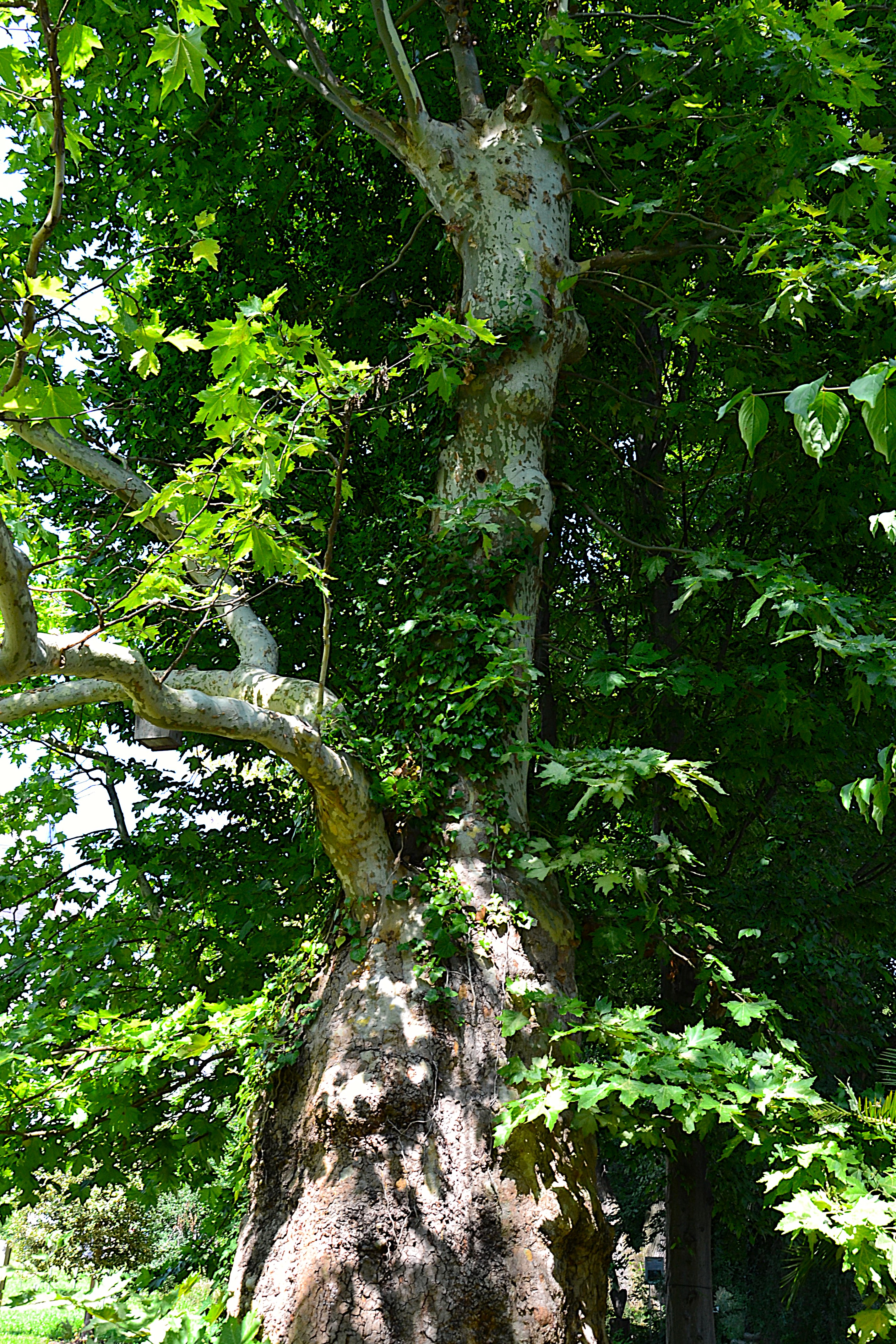
A key to its hardiness lies in its unique bark. Unlike many other tree species, the plane tree sheds its bark in large plates. This allows pollutants and soot to be effectively removed along with the bark. The characteristic mosaic pattern makes the plane tree an aesthetic eye-catcher and a natural ‘air filter’. Due to its resilience and its contribution to air quality, it is the ideal urban tree.
Key data:
| Trunk diameter: | 199 cm |
| Trunk circumference: | 625 cm |
| Height: | 17.5 m |
| Crown diameter: | 15 m |
2. Mountain – Giant sequoia
(Sequoiadendron giganteum)
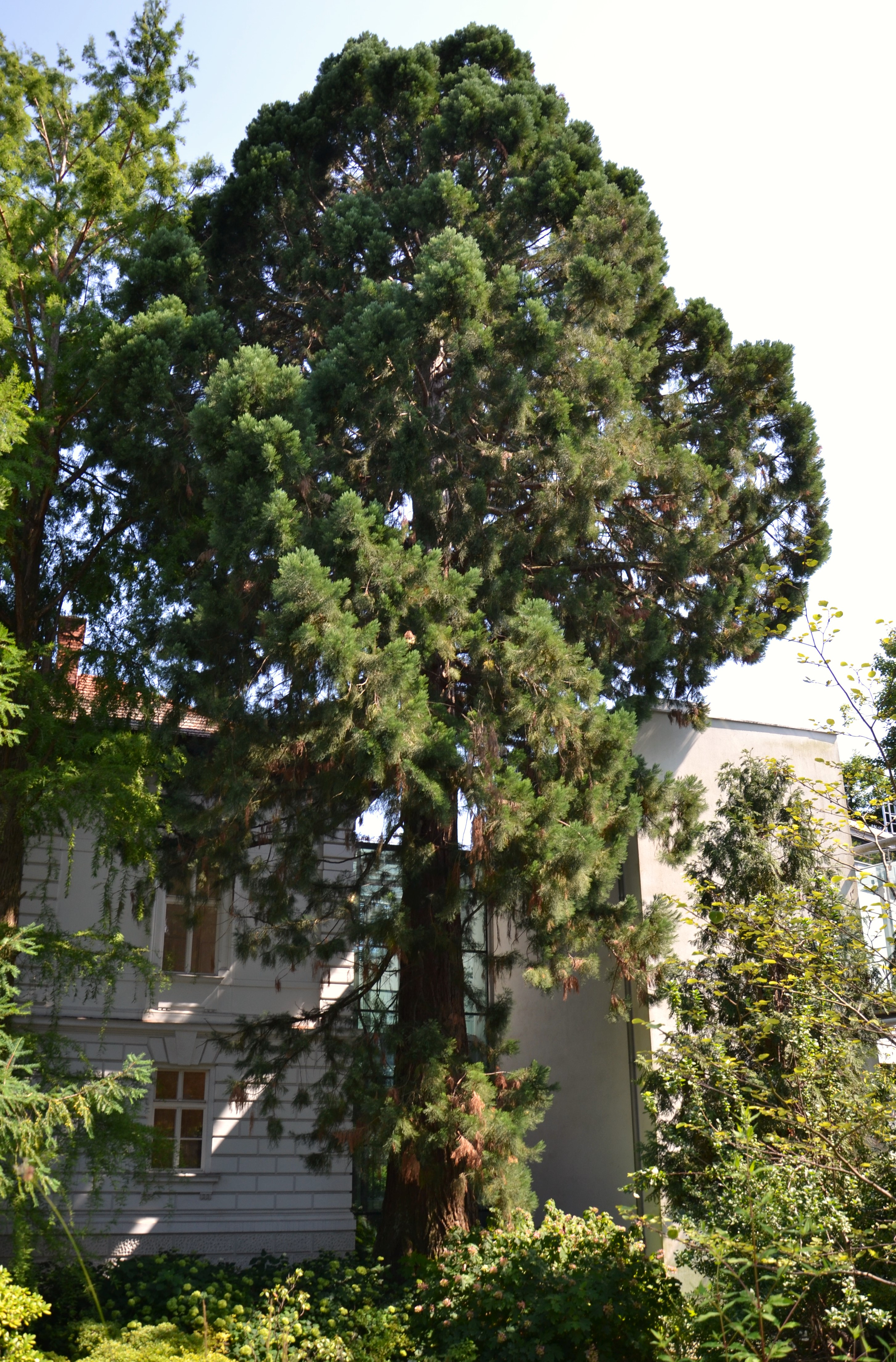
In second place is the giant sequoia (Sequoiadendron giganteum) in the Botanical Garden, with a diameter of over 1.5 metres, a trunk circumference of almost 5.5 metres and a height of 20 to 30 metres. Its crown measures around 15 metres in diameter. Also known as the giant sequoia, the mountain sequoia is a true natural talent when it comes to withstanding extreme heat and even fire. Its thick, fibrous bark is particularly striking. It contains many tannins and acts as a natural protective layer that repels heat and preserves the tree’s sensitive interior, even during forest fires.
The giant sequoia is one of the so-called pyrophytic plants, which are adapted to recurring fires and not only survive the fire but even use it for their propagation. The cones of the giant sequoia often only open due to the heat of a fire. This allows the seeds to reach ground that, after the fire, is free of dense vegetation and receives plenty of light. This soil offers the perfect conditions for young trees.
The bark of the giant sequoia is not only fire-resistant but also has a complex structure. It contains tiny air chambers that provide additional insulation and cushion mechanical impacts such as falling rocks. As a result, even very old specimens can remain intact for centuries.
The giant sequoia is a striking example of the astonishing strategies that nature has developed over the course of evolution. It demonstrates how life can thrive even under extreme environmental conditions and how vital adaptability is for survival.
Key facts:
| Trunk diameter: | 172 cm |
| Trunk circumference: | 540 cm |
| Height: | 25 m |
| Crown diameter: | 15 m |
3. London plane tree
(Platanus x hispanica)
With a diameter of 1.6 metres, a circumference of 5 metres and a height of 12.5 metres, the plane tree makes a striking impression with its majestic appearance. Its crown spans a diameter of 12 metres. These impressive dimensions underscore the plane tree’s importance for biodiversity and the campus landscape.
Key data:
| Trunk diameter: | 159 cm |
| Trunk circumference: | 500 cm |
| Height: | 12.5 m |
| Crown diameter: | 12 m |
4. Ancient sequoia
(Metasequoia glyptostroboides)
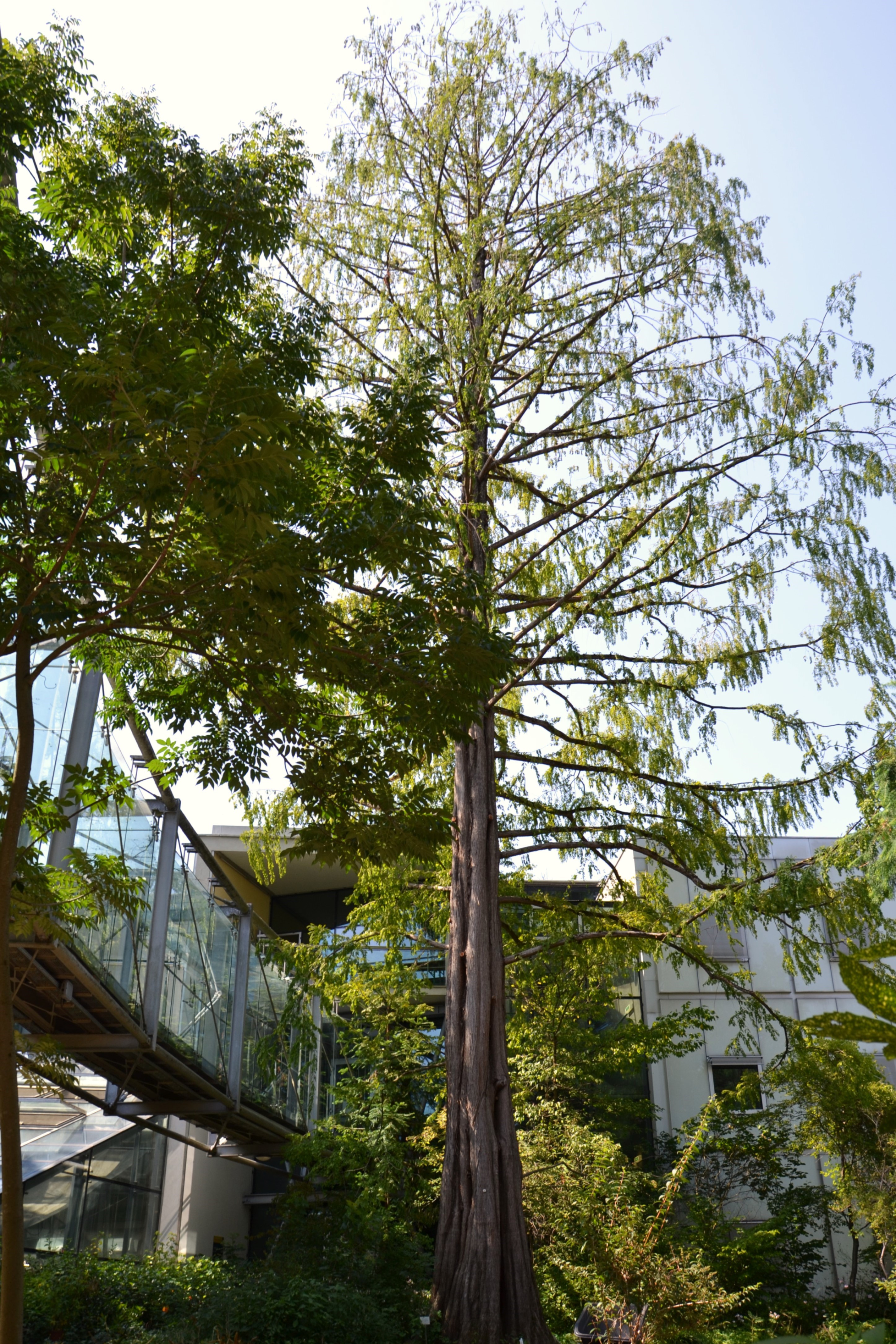
The dawn redwood (Metasequoia glyptostroboides) in the Botanical Garden takes fourth place. With a diameter of 1.5 metres, a trunk circumference of almost 5 metres, a height of 20 to 30 metres and a crown span of 12 metres, it is impressive for more than just its size.
The dawn redwood is a fascinating living fossil. For a long time, it was known only from fossils and was considered extinct. It was not until 1941 that scientists discovered living specimens in remote mountainous regions of China.
It is extremely adaptable and withstands changing climatic conditions, making it particularly valuable for urban greening projects and climate protection. Through its ability to sequester large amounts of carbon dioxide, the giant sequoia actively contributes to climate protection. It also provides a habitat for many insects, birds and other small animals, thereby supporting local biodiversity.
Key data:
| Trunk diameter: | 149 cm |
| Trunk circumference: | 468 cm |
| Height: | 25 m |
| Crown diameter: | 12 m |
5. Red oak
(Quercus rubra)
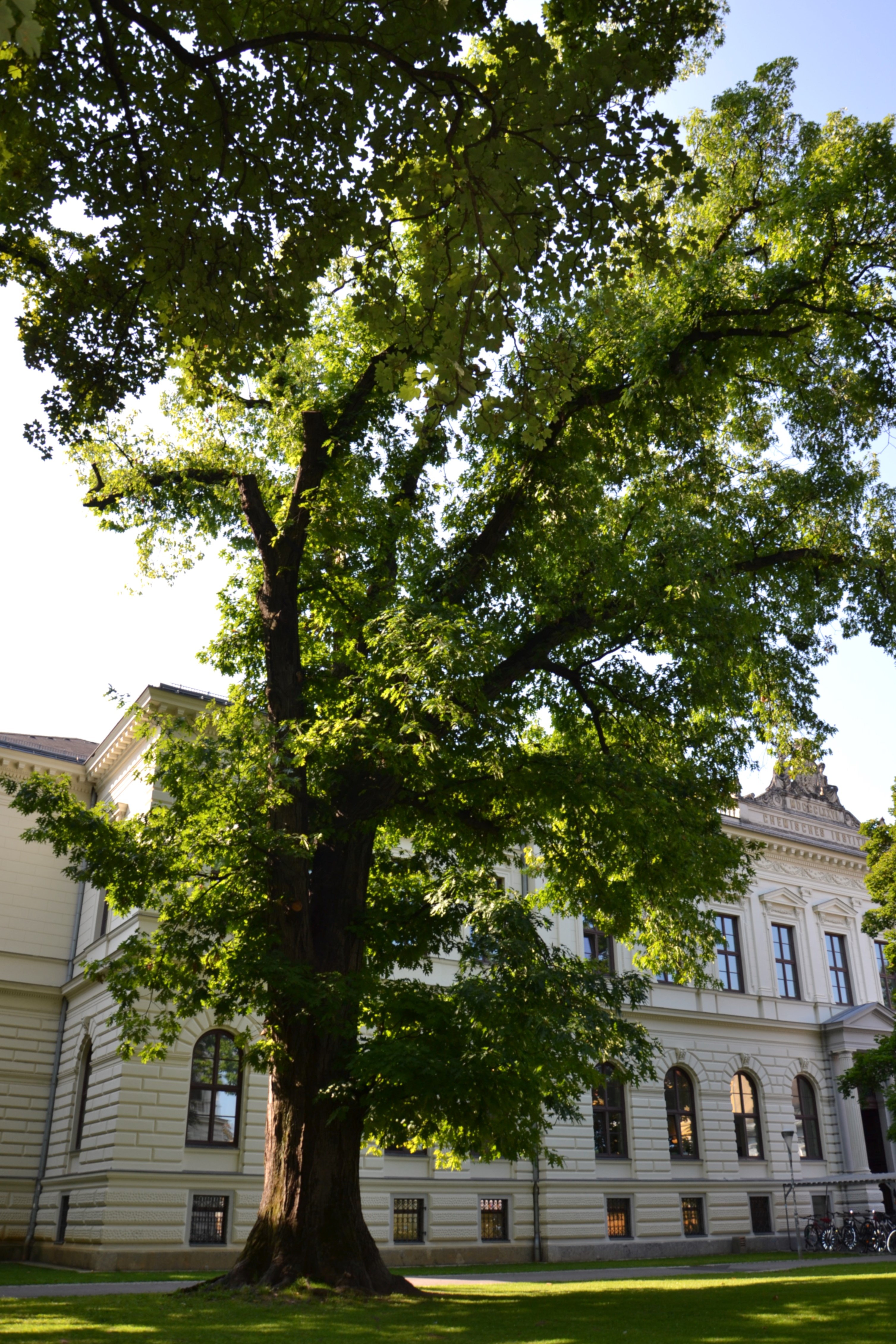
In fifth place is the red oak (Quercus rubra), which stands on the campus. It has a diameter of 1.5 metres, a trunk circumference of 4.6 metres, a height of between 20 and 30 metres and an impressive crown spread of 18 metres.
The red oak is an imposing deciduous tree that originates from North America and is now also widespread in Europe. Its leaves are broad and deeply lobed; in autumn they turn a bright red, which gives the red oak its name and lends it a particularly beautiful appearance.
Although the red oak is regarded in Central Europe as a valuable tree for forestry and urban greening, it is also considered an invasive species in some regions. Its rapid growth rate and ability to spread effectively via seeds enable it to displace native plant communities.
Particularly in near-natural forests, the red oak can restrict biodiversity – especially that of shade-loving native species – due to its dense canopy and intense competition for light and nutrients. Furthermore, it is more resistant to pests than native oak species, as it is rarely attacked by specialised parasites in this region.
This enables it to become dominant in European forests, albeit partly at the expense of native species.
Key data:
| Trunk diameter: | 148 cm |
| Trunk circumference: | 465 cm |
| Height: | 25 m |
| Crown diameter: | 18 m |