Bird and bat nesting aids
It is not only we humans who are feeling the effects of the rapid transformation of urban habitats; many animal species are also affected. Birds and bats, in particular, are suffering as suitable hiding places and breeding sites are increasingly lost. Sealed surfaces and renovated buildings leave hardly any room for natural niches and places of refuge.
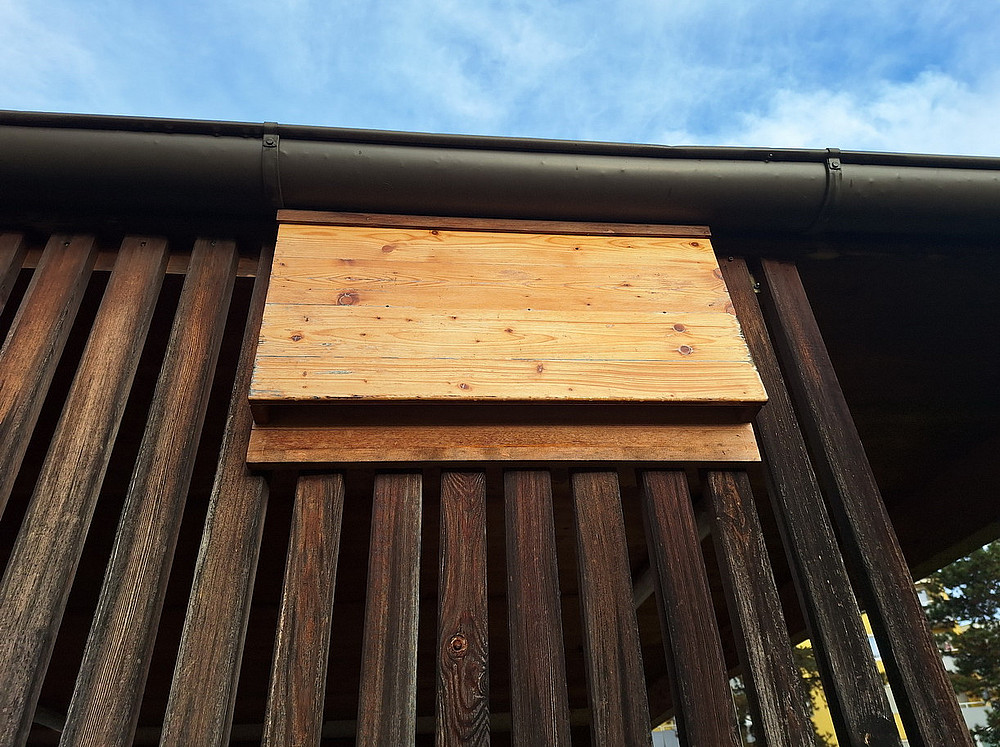
In this context, bird and bat boxes can make a valuable contribution to species conservation. These special nesting aids create alternative habitats for species whose natural breeding sites are now scarce. They offer protection from the weather and predators, facilitate nest-building and serve as a safe nursery for rearing young.
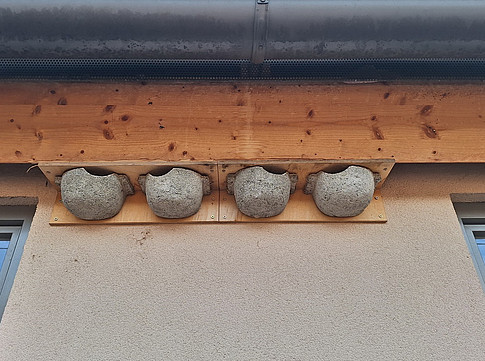
At the University of Graz, nesting boxes are specifically selected to meet the needs of the respective target species and installed appropriately on site. The shape, size and entrance hole vary depending on the species. One example is the house martin (Delichon urbicum), which used to be common in Graz but has declined sharply in recent decades. With appropriate measures to improve the habitat and by installing artificial nests, this building-nesting bird could once again become established on campus.
However, such species conservation measures are only successful if the ecological environment is right. This includes sufficient food, a quiet environment during the breeding season and a landscape design that is as close to nature as possible. Particularly in urban areas, it is important that the environment offers sufficient food, such as insects, seeds or fruits. The University of Graz is addressing precisely this issue and is pursuing a comprehensive approach as part of its biodiversity strategy. In this way, the campus is becoming a place where not only learning and research take place, but where new life is also created.
Target species:
For birds:
the house martin (Delichon urbicum) suffers from the loss of traditional nesting sites on buildings. Special martin boxes and colony nesting boxes help to preserve breeding sites.
The house sparrow (Passer domesticus), also known as the sparrow, often finds no niches left on modern façades
Great Tits (Parus major) and Blue Tits (Cyanistes caeruleus), Robins (Erithacus rubecula) or Black Redstarts (Phoenicurus ochruros) readily accept nesting boxes as a substitute for tree hollows and other natural breeding sites
The common swift (Apus apus), a typical urban bird, requires special flight openings and cavities at great heights
For bats:
Pipistrelles (Pipistrellus pipistrellus), serotine bats (Eptesicus serotinus), Brandt’s bats (Myotis brandtii) and other species use special flat boxes on buildings as daytime roosts or nursery roosts