About the project

The project team:
- Ökoteam - Institute for Animal Ecology and Natural Area Planning
- University of Graz - Directorate for Resources and Planning
- AEE - Institute for Sustainable Technologies
- Siegfried Stark Technical Office
Project duration: (provisionally) 26 months
Start: Nov. 2024
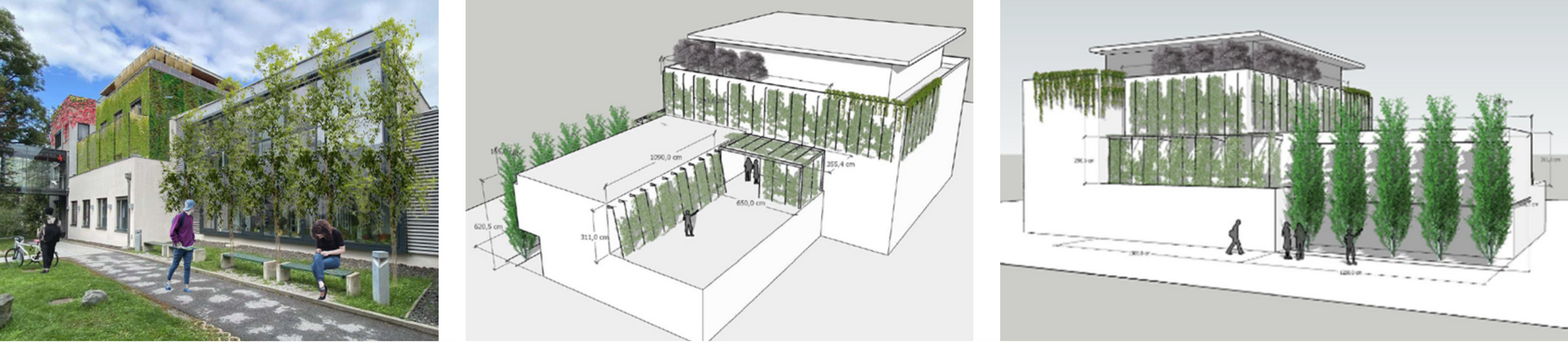
The example of an existing building at the University of Graz, which suffers severely from overheating, demonstrates the potential of targeted greening. Comprehensive monitoring of indoor climate, building physics, energy consumption and biodiversity, both before and after the implementation of greening measures, yields valuable scientific data. This data makes it possible to assess the actual effectiveness of building greening under real-world conditions and provides important insights for future projects in urban areas.
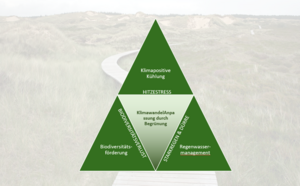
1. optimisation of the greening planning, integration of rainwater management and biodiversity promotion measures
2. structural realisation of the three-sided façade greening at the Heinrichstrasse 80 building, Graz
3. quantitative recording of the effectiveness of greenery as a room cooling and outdoor climate regulation measure
4. quantitative findings on the biodiversity-promoting effects of the greening of the building and the additional support measures
5. economic and ecological evaluation of building air conditioning through greening compared to technical cooling solutions
6. digitalisation in the monitoring and operation of building greening using the "digital twin"
Conclusion
HeinrichBiCool is the University of Graz's flagship project for sustainable change. It ensures that the users of the Heinrichstraße 80 building no longer suffer from high temperatures. At the same time, it promotes biodiversity at the site and reduces electricity consumption and CO₂ emissions by dispensing with technical air conditioning systems. The aim is to cool the building without the use of electric air conditioning units for the time being.