



Sandarium (Arenarium)
One might not immediately expect to find biodiversity on a simple sandy patch, yet that is precisely where it begins: sandy areas, also known as sand pits, are an indispensable habitat for many specialised animals. Particularly in urban areas, where natural sandy patches have become rare, they can play a surprisingly significant ecological role.
Around half of all wild bees do not nest in hollow plant stems, but dig their brood tunnels into open ground. However, sealed surfaces, dense lawns and mulched areas leave them with no space at all. Sandariums offer a solution to this. This is an unplanted, sunny sandy area with loose, cohesive sand.
This structure creates ideal conditions for a variety of ground-dwelling species that can no longer find a place in compacted or planted soils. It offers specialised animals such as sand bees, antlions and beetles an ideal place for laying eggs, overwintering or hunting.
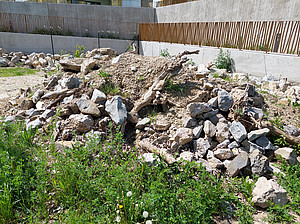
It is deliberately left unplanted and is regularly monitored to ensure that vegetation does not become too dense. In combination with stone structures and flowering meadows, this creates a complete habitat mosaic that serves as a habitat not only for insects, but also for reptiles, birds and small mammals.
Target species
A properly designed sandarium specifically encourages species that depend on open, dry, warm ground:
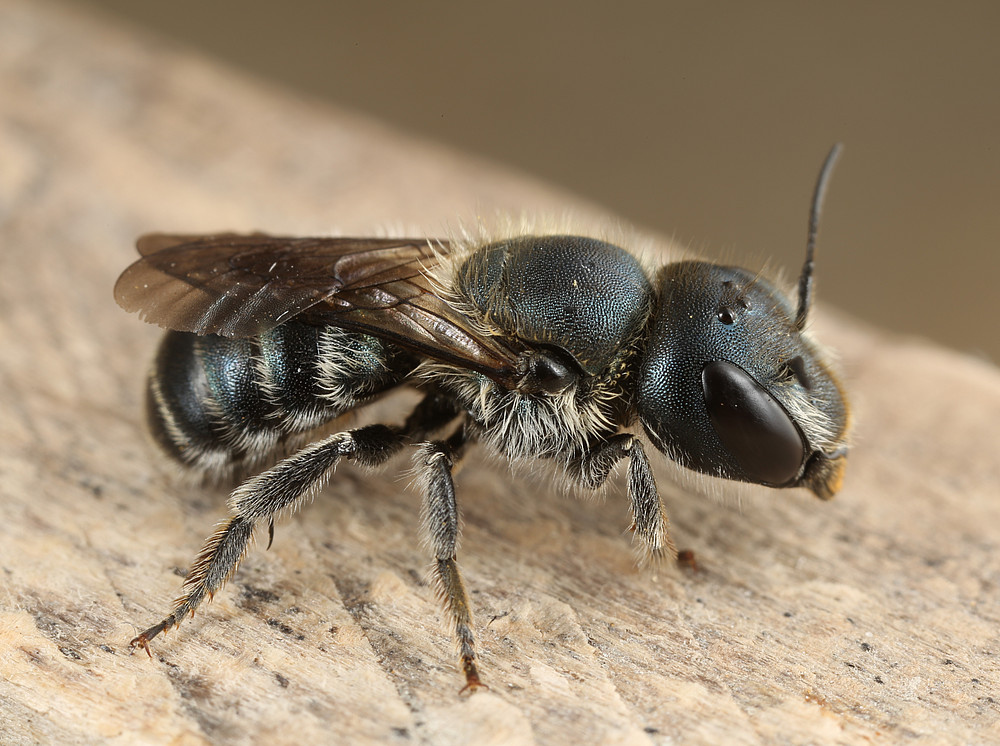
- Wild bees such as the steel-blue mason bee (Osmia caerulescens) require open patches of ground and sandy substrates for laying their eggs. Many species dig their brood tunnels directly into the sand there.
- Antlions, the larvae of the lacewing species Myrmeleon formicarius, build their trapping pits exclusively in loose sandy soil.
- Beetles, spiders, butterflies and even reptiles such as the sand lizard use sandariums as egg-laying sites, hunting grounds, hiding places or simply for basking.
- Small mammals also benefit when sandy areas are combined with other natural structures such as deadwood, stones or flowering areas.
Many of these species are now found only very rarely or not at all in Graz because their habitats have been lost. Sealed surfaces, intensive lawn maintenance and heavy use leave hardly any room for open ground areas. Sandariums create new microhabitats here that are both low-maintenance and ecologically valuable.