



Stone structures
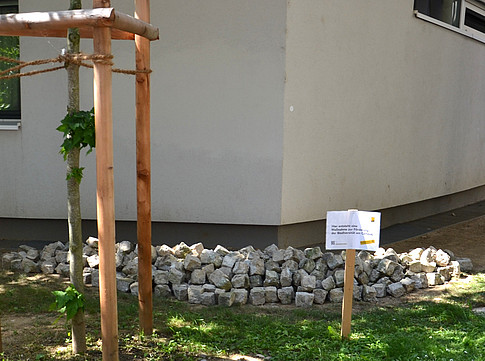
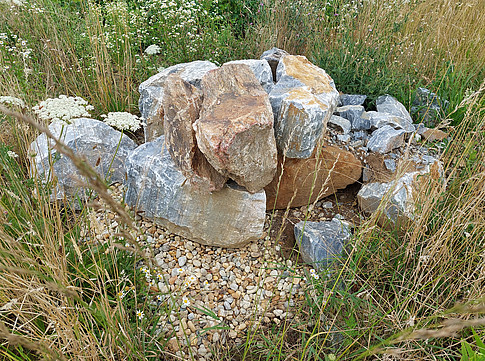
At first glance, they are simply loosely stacked stones. On closer inspection, however, stone piles and dry stone walls reveal an unexpected diversity of species: from lizards and ground beetles to spiders and wild bees, numerous animals make use of these microhabitats. They all benefit from the cavities, crevices and warm hiding places.
These structures offer thermal diversity, protection from predators and ideal hiding places for numerous heat-loving species. The gaps and the varying microclimates within the structures create a variety of small habitats. Particularly in urban areas, where natural rocks or scree slopes are lacking, they provide an indispensable habitat niche.
The University of Graz places these habitats primarily in extensively maintained green spaces or on green roofs. The stones are loosely layered and placed in varying sizes to ensure maximum structural diversity. Combined with deadwood, this creates small biodiversity hubs right in the heart of the campus.
For the University of Graz, stone lenses are not merely a contribution to the conservation of endangered species. They are also a visible sign of how small measures can have a major impact and how urban spaces can once again become more hospitable to animals and plants. This measure requires little maintenance, is long-lasting and sends a strong signal in favour of nature-oriented campus design, fully in line with the University of Graz’s Biodiversity Strategy 2025.
Target species
In Graz, and right here on campus, stone potholes can provide targeted support for endangered species, such as:
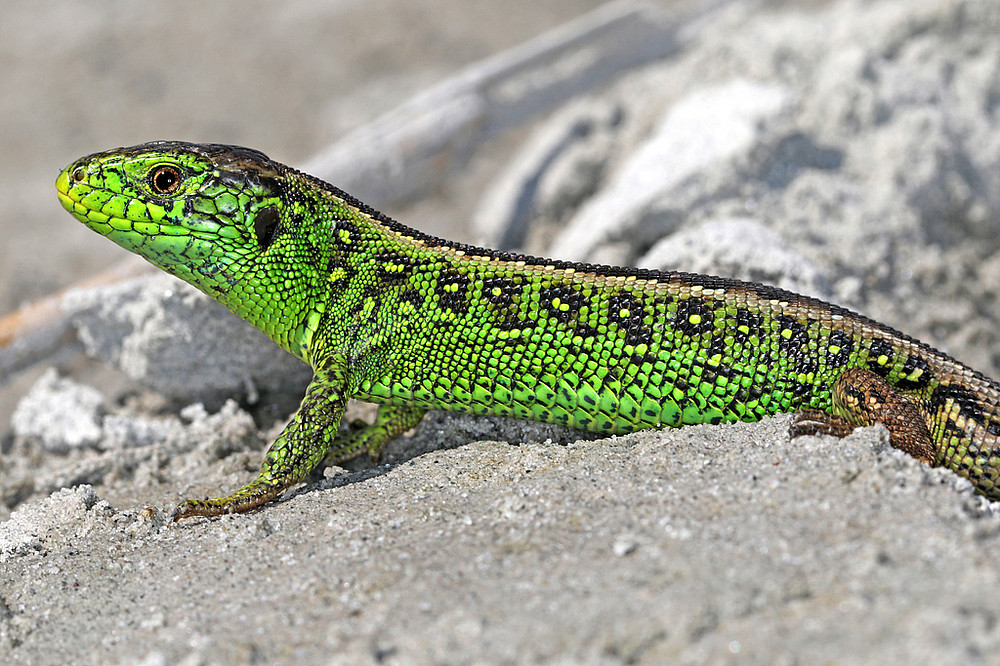
- Sand lizards, whose numbers in the city have declined sharply, find safe hiding places here and sunny spots to warm up.
- Wild bees and other insect species use the cavities as breeding sites.
- Spiders, beetles and woodlice also rely on structurally rich refuges. In stone piles, they find exactly the conditions they need.
- Small mammals and birds sometimes use such areas as resting or hunting habitats.